Pt 5000 / Vidya Peak Expedition Details
Pt 5000 / Vidya Peak Expedition
Starting from
₹50,000 ₹40,000

09 Days Trip

Uttarakhand
Best season: April
Book A Tour
Total
₹ 0
Start Point : Dehradun
End Point : Dehradun
Short Itinerary
- Day 1: Drive from Dehradun to Janaki Chatti (2650 m) , Overnight in Lodge
- Day 2: Trek to Forest Camp (3297 m)
- Day 3: Trek to Base Camp Mala Bugyal (3827 m)
- Day 4: Equipment Distribution and Acclimatization Day
- Day 5: Occupy Summit Camp( 4280 m)
- Day 6: Attempt Summit (5000 m) and Descend to Summit Camp
- Day 7: Descend to Base Camp
- Day 8: Descend to Janaki Chatti, Overnight in Lodge
- Day 9: Departure from Janki Chatti to Dehradun
Detailed Description – Vidya Peak (Point 5000)
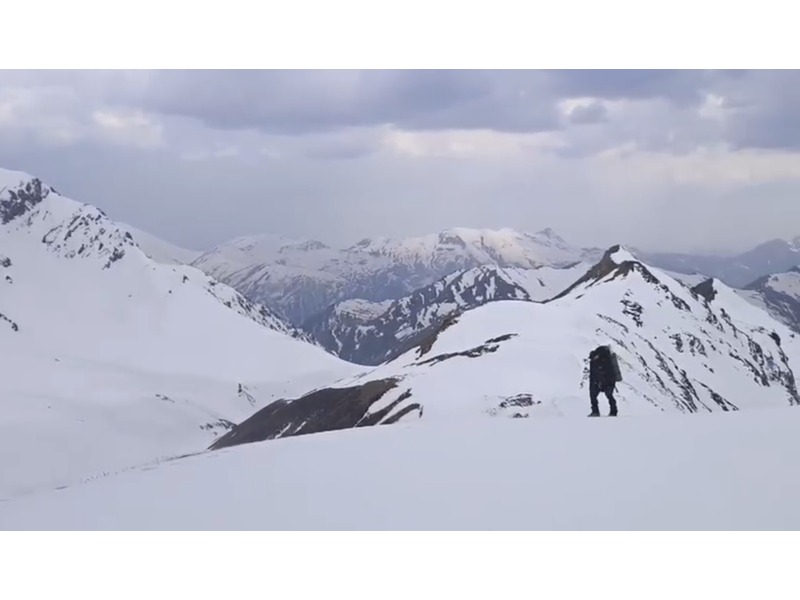
Vidya Peak, also known as Point 5000, is a prominent technical mountaineering peak situated in the Saraswati Range of the Garhwal Himalayas, within the Uttarkashi district of Uttarakhand. Standing at an altitude of approximately 5,000 meters above sea level, Vidya Peak presents a demanding yet rewarding climb, ideal for mountaineers seeking hands-on experience in technical high-altitude terrain.
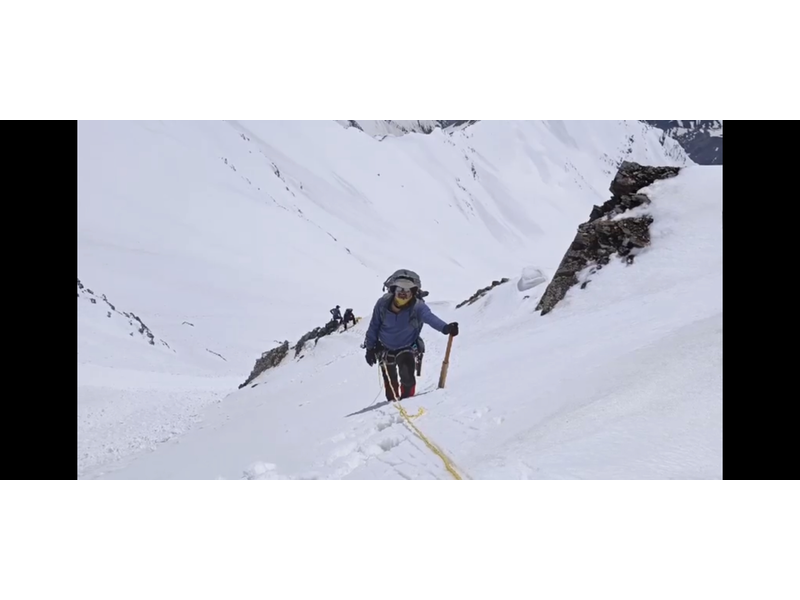
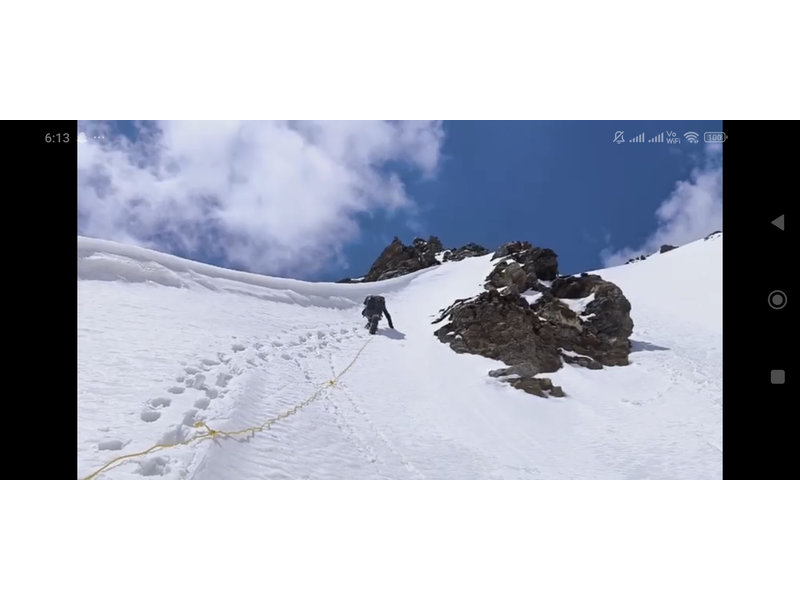
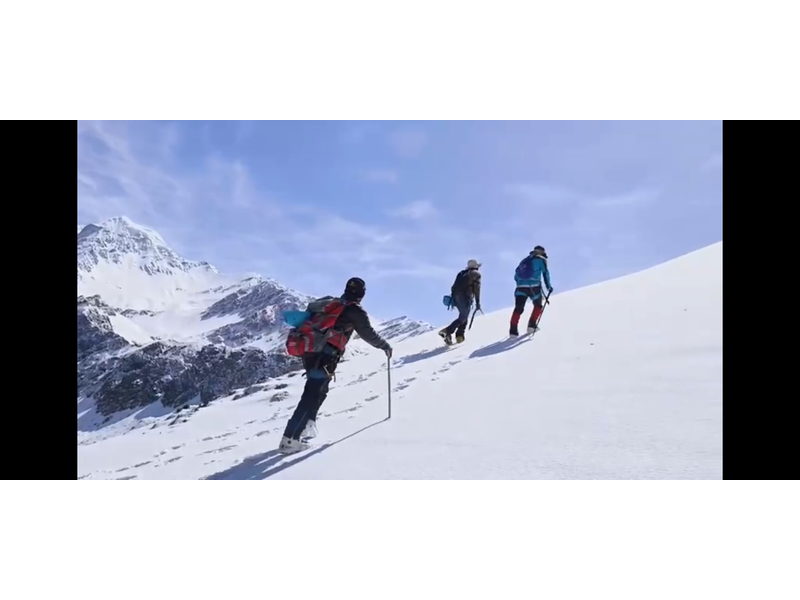
The ascent of Vidya Peak involves negotiating a challenging mix of rock, snow, and ice, with several steep and exposed sections that require fixed ropes, use of crampons, ice axes, helmets, and proper belay techniques. Certain slopes range between 65–75 degrees, making the climb physically strenuous and technically engaging. Due to these conditions, prior experience in high-altitude trekking and basic mountaineering is strongly recommended.
Expeditions typically establish a base camp within the Saraswati Range, followed by intermediate camps to allow gradual acclimatization and safe load movement. The route is designed to support proper altitude gain, rest, and technical preparation before the summit push. The surrounding terrain is remote and largely untouched, offering a true expedition-style environment with minimal human interference.
Vidya Peak holds historical significance as it was first successfully summited in May 2024 under the leadership of Vijay Rautela, with team members Aluri Sai Kiran, Ashutosh Rana, and Neeraj Rana. The peak was named “Vidya”, meaning education, by Aluri Sai Kiran—symbolizing the spirit of learning, discipline, and growth that mountaineering instills. Today, Vidya Peak stands as an inspiring objective for climbers looking to advance their technical skills while experiencing the raw and pristine beauty of the Garhwal Himalayas.
Vidya Peak Expedition – Day-wise Itinerary
Day 1: Drive from Dehradun to Janaki Chatti (2,650 m)
The journey begins with an early morning drive from Dehradun to Janaki Chatti, covering approximately 220 km in 8–9 hours. The scenic drive winds through the Garhwal Himalayas, passing rivers, mountain towns, and dense forests. Upon arrival at Janaki Chatti, the team checks in for an overnight stay and prepares for the trek ahead.
Day 2: Trek from Janaki Chatti to Forest Camp (3,297 m)
The trek starts from Janaki Chatti and ascends steadily through dense pine and rhododendron forests. Covering around 6 km in 6–7 hours, the trail is moderately challenging with gradual altitude gain. The day ends at Forest Camp, a quiet campsite surrounded by alpine vegetation.
Day 3: Trek from Forest Camp to Base Camp – Mala Bugyal (3,827 m)
Today’s trek continues through open meadows and high-altitude terrain as the team heads towards Mala Bugyal, covering approximately 6 km in 5–6 hours. Mala Bugyal is a vast alpine meadow and serves as the base camp for the expedition, offering stunning views of surrounding peaks and valleys.
Day 4: Acclimatization and Equipment Distribution at Base Camp
This day is reserved for acclimatization to help the body adjust to the altitude. Climbing equipment is distributed, safety procedures are reviewed, and the team undergoes basic technical training. Short acclimatization walks around the base camp are undertaken to aid altitude adaptation.
Day 5: Trek from Base Camp to Summit Camp (4400 m)
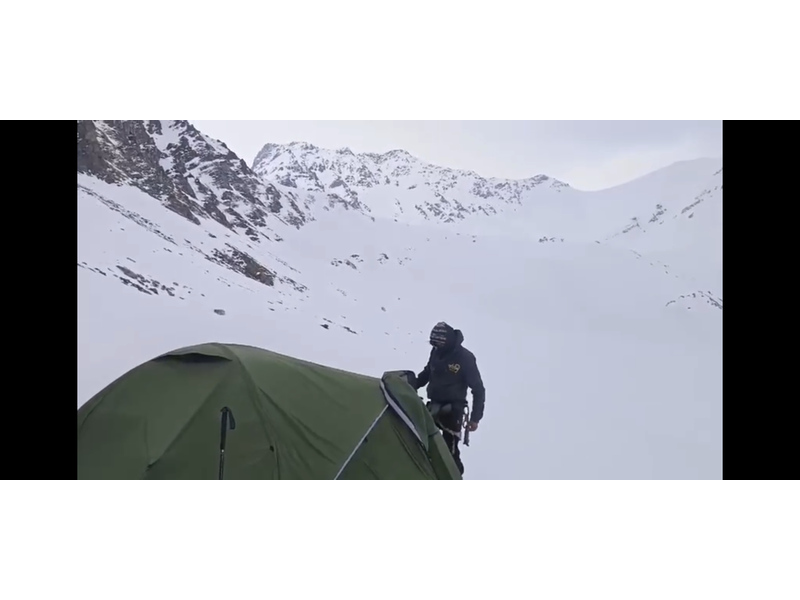
The team moves towards the summit camp, covering about 5 km in 4–5 hours. The terrain becomes steeper and more demanding, requiring careful movement. Upon reaching the summit camp, tents are pitched, and final preparations are made for the summit attempt.
Day 6: Summit Attempt of Vidya Peak (5,000 m) and Return to Summit Camp
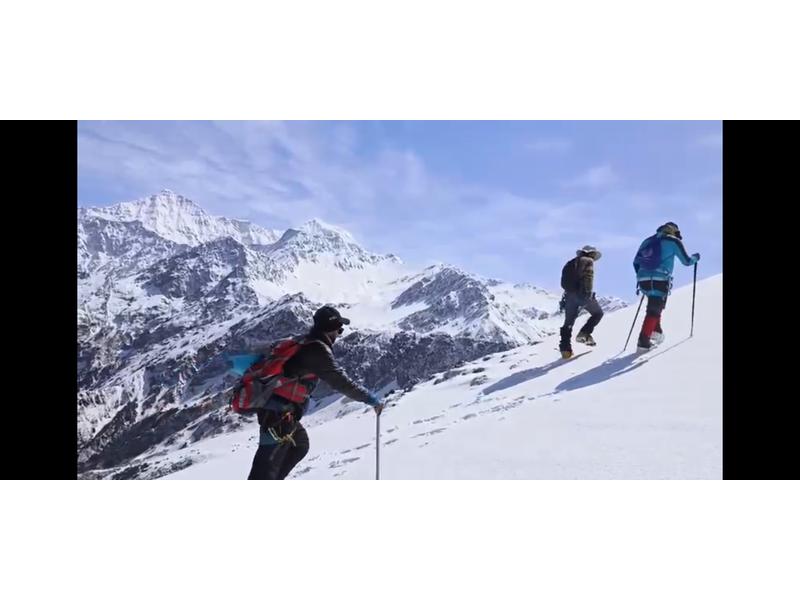
An early alpine start marks the summit day. The round trip takes approximately 14 hours and involves technical climbing sections with rope fixing on steep slopes ranging from 65–75 degrees. After reaching the summit and enjoying panoramic Himalayan views, the team carefully descends back to the summit camp.
Day 7: Descend from Summit Camp to Base Camp (Mala Bugyal)
After a demanding summit day, the team descends gradually back to Mala Bugyal, covering 5 km in 3–4 hours. The rest of the day is spent resting, rehydrating, and recovering at base camp.
Day 8: Descend from Mala Bugyal to Janaki Chatti
The expedition begins its final descent, retracing the route through Forest Camp and dense forests back to Janaki Chatti. The 12 km descent takes around 8–9 hours and marks the completion of the trekking phase of the expedition.
Day 9: Departure
After breakfast, the team departs from Janaki Chatti for onward journeys, carrying back memories of a challenging and rewarding high-altitude expedition.
Inclusions
-
Meals During the Expedition:
All meals are included from Dinner on Day 1 to Breakfast on Day 9, ensuring proper nutrition throughout the expedition. -
Package Cost Validity:
The above-mentioned package price is applicable for a minimum group size of 6 participants and fixed departure dates. -
Forest Permits & Camping Charges:
All required forest entry permits and designated camping charges are included. -
Accommodation:
Accommodation will be provided in 4-season expedition tents on a triple-sharing basis, along with thermal-rated sleeping bags and sleeping mats.
Guesthouse/Lodge/Homestay accommodation at Janaki Chatti on Day 1 and Day 8 is also included. -
Support Staff:
Services of experienced trek guides, cooks, helpers, and mules/porters for carrying common equipment and ration are included. -
Expedition Leader:
An IMF-approved Expedition Leader will lead the climb. -
Transportation:
Dehradun to Dehradun transportation as per the itinerary is included. -
Technical & Safety Equipment:
Common technical equipment including PP ropes, helmets, ice axes, crampons, mountaineering boots, snow stakes, and dead man/boy anchors will be provided. -
Peak Booking Fee (Indian Nationals):
Peak booking fee is included up to the amount applicable for Indian nationals.
Exclusions
-
Portage of Personal Bags:
Carrying personal backpacks or excess luggage is not included and can be arranged at an additional cost. -
Travel Insurance:
Any form of travel or medical insurance is not included. Participants are advised to arrange their own insurance. -
Personal Expenses:
Expenses of a personal nature such as extra meals, snacks, beverages, laundry, phone calls, and personal purchases are not included. -
Unspecified Expenses:
Any expense not specifically mentioned under inclusions will be borne by the participant. -
Early Termination Costs:
Any additional expenses incurred due to early exit or premature completion of the expedition will be charged extra. -
Tips & Gratuities:
Tips for local guides, porters, and staff are not included. -
IMF Fees for Foreign Nationals:
-
Peak booking fee: USD 700 for a team of two, and USD 325 for each additional participant
-
Forest permit / camping fee: USD 880–1000 (up to a group of 10)
-
Mandatory Liaison Officer fee: Approx. USD 500 (for a group of up to 10)
-
-
Unforeseen Circumstances:
Any cost arising due to bad weather, landslides, road blockages, natural calamities, or any situation beyond our control will be borne by the participant.
Vidya Peak Expedition – Trek Highlights
-
Perfect Entry-Level Technical Peak (5,000 m):
Vidya Peak is an excellent choice for trekkers looking to transition into technical mountaineering, offering steep snow slopes and rope work without extreme altitude. -
Scenic Approach Through Dense Forests:
The trail from Janaki Chatti passes through pine and rhododendron forests, providing a peaceful and immersive Himalayan trekking experience. -
Stunning Alpine Meadows – Mala Bugyal:
The expansive Mala Bugyal base camp is a visual highlight, offering wide open meadows surrounded by towering Himalayan peaks. -
Technical Summit Day Experience:
Summit push involves rope fixing on 65–75° snow/ice slopes, use of crampons, ice axes, and proper mountaineering techniques under expert supervision. -
IMF-Approved Expedition Leadership:
The expedition is led by an IMF-certified leader, ensuring professional guidance, safety standards, and structured climbing protocols. -
Ideal Acclimatization Profile:
Well-planned acclimatization day at base camp improves summit success rate and helps participants adapt safely to altitude. -
Remote & Less Crowded Peak:
Vidya Peak sees very few climbing teams, making it ideal for those seeking solitude and a raw Himalayan expedition feel. -
Complete Expedition Setup:
Includes 4-season tents, technical gear, trained support staff, and mule support, offering a true expedition-style experience. -
Panoramic Summit Views:
From the summit of Vidya Peak, climbers are rewarded with breathtaking views of surrounding Himalayan ranges and deep valleys.
🏕️ Essential Mountaineering Gear Checklist
Clothing – Layer Up Wisely
-
Base layers (thermal innerwear – top & bottom)
-
Insulated jacket (down or synthetic for sub-zero temps)
-
Fleece jacket or softshell
-
Waterproof windcheater or hardshell jacket
-
Waterproof pants or rain pants
-
Trekking pants (2–3 pairs)
-
Quick-dry t-shirts or shirts (2–3)
-
Innerwear (thermal & regular)
-
Insulated gloves (waterproof)
-
Fleece or liner gloves for layering
-
Woolen cap or balaclava
-
Neck gaiter or buff
-
Sun cap or wide-brimmed hat
-
Trekking socks (4–5 pairs)
-
Woolen socks (2 pairs for cold nights)
Footwear
-
Trekking shoes (high-ankle, waterproof)
-
Snow boots (Scarpa or equivalent – often provided by organizers)
-
Camp sandals or crocs for evenings
-
Gaiters (to keep snow and debris out – usually provided)
Bags & Packs
-
Backpack (50–65L) with rain cover
-
Daypack (20–30L) for summit day
-
Duffel bag or rucksack (for mule load)
-
Dry bags or plastic ziplocks for waterproofing
Mountaineering & Technical Gear (mostly provided)
-
Crampons
-
Ice axe
-
Climbing rope
-
Carabiners and harness
-
Helmet
-
Snow goggles
-
Gaiters
-
Ascender or descender if needed
Camping Essentials
-
Sleeping bag (rated for -15°C to -20°C) – usually provided
-
Sleeping mat or foam pad
-
Headlamp with extra batteries
-
Trekking poles
-
Water bottles (total 2L capacity) or thermos
-
Mug and lunchbox
-
Power bank
-
Sunglasses (UV-protected, category 3 or 4)
Toiletries & Personal Hygiene
-
Toothbrush, toothpaste, biodegradable soap
-
Tissue roll and wet wipes
-
Sunscreen (SPF 50+) and lip balm
-
Hand sanitizer and face towel
-
Menstrual hygiene products (if applicable)
Medicines & Personal Care
-
Personal medications
-
Diamox (for AMS – only with doctor’s advice)
-
Paracetamol or painkillers
-
Broad-spectrum antibiotics
-
Band-aids or blister patches
-
ORS or electrolyte sachets
-
Muscle relaxant spray like Volini
-
Altitude sickness tablets
Documents & Miscellaneous
-
Valid ID proof (original and photocopy)
-
Medical certificate (if required)
-
Passport size photos (2–3)
-
Some cash (ATMs may not be available)
-
Notebook and pen
✅ Pro Tip: Pack light but smart. Stick to essentials, keep your backpack waterproof, and test your gear before the expedition.
Measures Taken by Parvat Exploration to Ensure the Security of Trekkers
At Parvat Exploration, trekking isn’t just an adventure – it’s a transformative journey into the heart of the Himalayas. But with every adventure comes the responsibility of ensuring your well-being. Backed by a highly qualified team, local expertise, and global safety standards, we take every measure possible to prioritize your safety.
🧗♂️ Fitness Evaluation & Trek Readiness
High-altitude treks demand physical endurance and mental resilience. Before confirming your participation in any of our treks, we assess your fitness to minimize risk.
-
Body Mass Index (BMI) Check: Trekkers are evaluated to ensure a healthy BMI range suited for high-altitude exertion.
-
Fitness Declarations: Participants are required to submit fitness proof or undergo an assessment if needed.
-
Acclimatization Protocols: Every itinerary includes rest days specifically for acclimatization to reduce the risk of AMS.
🩺 Health Monitoring on Trail
Throughout the journey, your health is monitored regularly by our trained trek leaders:
-
Vital Checks: Daily monitoring of oxygen levels, pulse rate, and blood pressure.
-
Health Cards: Each trekker’s vitals are documented and can be reviewed at the end of the trek.
-
Immediate Response: Any early symptoms of AMS or other altitude-related issues are immediately addressed.
💊 Medical Safety Measures
Parvat Exploration is prepared with a comprehensive medical kit on all high-altitude treks. Our kits are equipped with:
-
Blood Pressure Monitor
-
Oxygen Saturation Meter (Pulse Oximeter)
-
Portable Oxygen Cylinders
-
High-altitude emergency medicines:
-
Diamox (for AMS)
-
Dexamethasone (for HAPE/HACE)
-
Nifedipine
-
Asthalin Inhaler
-
Disprin
-
Sterile Syringes
-
Our trek leaders are AMC-qualified (Advanced Mountaineering Course) and trained in Wilderness First Aid.
⛺ World-Class Trekking Equipment
We never compromise on gear. We provide:
-
Customized Tents: Weatherproof tents that retain heat up to 10°C higher than outside.
-
-15°C Sleeping Bags: Suitable for sub-zero Himalayan nights.
-
Microspikes & Gaiters: Essential gear for snow and slippery terrain.
-
Ropes, Ice Axes, and Stretchers as needed for technical terrain or rescue.
🍲 Nutrition & Hydration on Priority
We fuel your journey with the right meals at the right time:
-
Nutritious Meals: Our food is designed to meet high-altitude dietary needs.
-
Local Delicacies: Experience the taste of Uttarakhand and Himachal on every trek.
-
Hydration Monitoring: Trekkers are routinely reminded and encouraged to hydrate properly to reduce risk of AMS.
🚨 Emergency Response to AMS, HAPE & HACE
Our trek leaders are well-trained to detect and manage Acute Mountain Sickness (AMS), and more severe conditions like HAPE (High Altitude Pulmonary Edema) and HACE (High Altitude Cerebral Edema).
Recognizing AMS Symptoms:
-
Headache, nausea, dizziness
-
Difficulty sleeping or breathing
-
Loss of appetite or fatigue
Our Action Plan:
-
Triple One Protocol: 1 Disprin + 1 Liter Water + 1 Hour Rest.
-
Descent Protocol: If symptoms persist, the trekker is immediately escorted to a lower altitude.
-
Oxygen Support & Medication: Provided immediately if symptoms escalate.
We advise trekkers never to self-medicate. Always consult the trek leader first.
⚠️ Risk and Response Mechanism
🏔️ Altitude Risk
Response: Constant health checks, gradual ascent, acclimatization days, oxygen support.
🌦️ Weather Uncertainty
Response: Trek leaders take the final call. We never proceed in unsafe conditions.
🧍♂️ Injuries on Trail
Response: Minor injuries treated on-site. Serious injuries are evacuated via stretcher to the nearest roadhead and medical center.
📵 Lack of Communication
Response: Our team uses walkie-talkies and local support staff as runners for effective coordination across camps.
🛡️ Why You Can Trust Parvat Exploration
-
✅ 3 IMF Associate Members on our core team – among only 100 in India.
-
✅ Accredited by ATTA,ATOAI, IMF, and Uttarakhand Tourism.
-
✅ Himalayan Locals as your guides – born and raised in the mountains.
-
✅ Focus on year-round safety, whether it’s a summer climb or winter expedition.
🔚 Final Word
Parvat Exploration believes a memorable trek is a safe trek. We combine years of mountaineering expertise, world-class equipment, local insight, and a commitment to excellence so you can explore the Himalayas with confidence.
Train your lungs, legs, and mind – all three matter equally.
🏋️♂️ Extended Fitness Tips for High-Altitude Mountaineering:
1. Build Endurance Over Speed:
You’re not training for a sprint; you’re preparing for a long-duration challenge. Go for long, slow hikes with a backpack (gradually increase weight). Weekend treks are excellent real-time simulators.
2. Train with a Backpack:
Start adding 5–10 kg weight in your backpack during your stair climbs or trail hikes to mimic the actual load you’ll carry during the expedition.
3. Strengthen Your Ankles & Knees:
Do step-ups, box jumps, and single-leg balances to reduce the risk of injury. Downhill walks strain knees—practice them intentionally.
4. Flexibility & Mobility:
Add yoga and dynamic stretching to your regime. A flexible body handles terrain variations better and helps avoid cramps or joint stiffness.
5. Altitude Acclimatization Strategy:
Get used to climbing high, sleeping low. If you live in the plains, consider weekend hikes at moderate altitudes (2,000m–3,000m).
6. Improve Recovery Time:
Monitor how fast your heart rate returns to normal post-exercise. Better recovery = better adaptation at altitude. Try interval training (HIIT or hill sprints once or twice a week).
7. Mental Conditioning:
Mountaineering tests your grit. Practice meditation, cold showers, solo walks in nature—anything that builds patience and tolerance in tough conditions.
8. Nutrition Discipline:
Eat clean. Focus on complex carbs, good fats, and protein. Hydrate constantly. Add electrolytes to your water when training hard or sweating a lot.
9. Simulate Trek Days:
Try doing back-to-back long hikes over weekends. It mimics multiple trekking days and builds resilience.
10. Sleep Hygiene:
Altitude can mess with sleep. Get into a regular sleep cycle now, and train your body to rest and recover even after late-night activities.
Photos
Terms and Conditions – Parvat Exploration
Welcome to Parvat Exploration! We are thrilled to be a part of your journey into the Himalayas. To ensure a smooth, safe, and transparent experience, we request you to read our terms and conditions carefully before booking any trek, tour, or service with us.
1. Booking and Payment Terms
-
A minimum advance payment of 40% of the total package cost is required to confirm your booking.
-
The balance 60% must be paid 15 days prior to the start of the trek or tour.
-
For bookings made within 15 days of departure, 100% payment is required at the time of booking.
-
Payments can be made via bank transfer, UPI, credit/debit cards, or other authorized digital methods.
-
Payment receipts will be acknowledged via email or WhatsApp.
2. Cancellation Policy
-
30+ days before departure: 90% refund of the advance amount.
-
15–29 days before departure: 60% refund of the advance amount.
-
7–14 days before departure: 30% refund of the advance amount.
-
Less than 7 days or no-show: No refund.
-
Refunds will be processed within 10–15 business days to the original payment method.
3. Itinerary Policy
-
The itinerary is tentative and subject to change based on weather, road conditions, local restrictions, or unforeseen events.
-
Final details will be shared closer to the departure or on-ground by the trek leader.
-
The trek leader reserves the right to make adjustments in the interest of safety or logistics.
4. Hotel & Transport Disclaimer
-
Hotel check-in/out timings follow the respective hotel’s policies; early check-in or late check-out may incur extra charges.
-
Transport may be shared or private depending on the package.
-
In the case of vehicle breakdowns, delays due to weather/roadblocks, or similar issues, we will make reasonable alternative arrangements—but no refunds or compensation will be provided.
5. Risk & Liability Disclaimer
-
Himalayan treks involve inherent risks including altitude sickness, landslides, injuries, wildlife, and weather unpredictability.
-
By booking, participants voluntarily accept these risks. Parvat Exploration, its team, or affiliates shall not be liable for any loss, injury, or delays.
-
Participants must follow trek leader instructions and avoid risky behavior.
-
Any costs for emergency evacuation, medical help, or rescue must be borne by the participant.
6. Medical & Fitness Requirements
-
Participants must disclose any pre-existing medical conditions at the time of booking.
-
High-altitude trekking demands good physical fitness; participants are advised to follow a preparatory fitness regime.
-
Parvat Exploration reserves the right to deny participation to individuals found medically unfit or under the influence of alcohol or drugs.
7. Code of Conduct
-
Trekkers are expected to maintain respectful behavior toward fellow participants, locals, and staff.
-
Littering, damaging nature or property, or violating forest laws may result in termination without refund.
-
Smoking and drinking are strictly prohibited during trek hours and at campsites.
8. Travel Insurance
-
Travel insurance is strongly recommended and should cover evacuation, injury, illness, and trip cancellations.
-
Not included in the package unless specifically mentioned.
-
Participants may purchase personal insurance from authorized providers.
9. Force Majeure
-
Parvat Exploration is not liable for service delays or failures due to natural disasters, pandemics, war, strikes, government restrictions, or other uncontrollable events.
10. Jurisdiction
-
Any dispute shall be under the jurisdiction of courts in Dehradun, Uttarakhand, or as otherwise specified by Parvat Exploration.
11. Contact Us
📞 +91 83830 88283 | +91 94561 12947
📧 explore@parvatexploration.com
🌐 www.parvatexploration.com
12. Special Casual Leave for Government Employees
Parvat Exploration, a registered adventure tour operator, qualifies government employees to avail Special Casual Leave (SCL) for up to 30 days in a calendar year, as per Pay Commission guidelines. This is applicable when participating in trekking or mountaineering expeditions organized by registered operators like us.
13. Special Note for Junior Trekkers
-
Participants below 15 years must be accompanied by a parent or guardian.
-
Trekkers aged 15 to 18 years may participate solo with a signed disclaimer from a parent or guardian.
Starting from
₹50,000 ₹40,000
09 Days Trip
Uttarakhand


Reviews
There are no reviews yet.