Everest Base Camp Trek Details
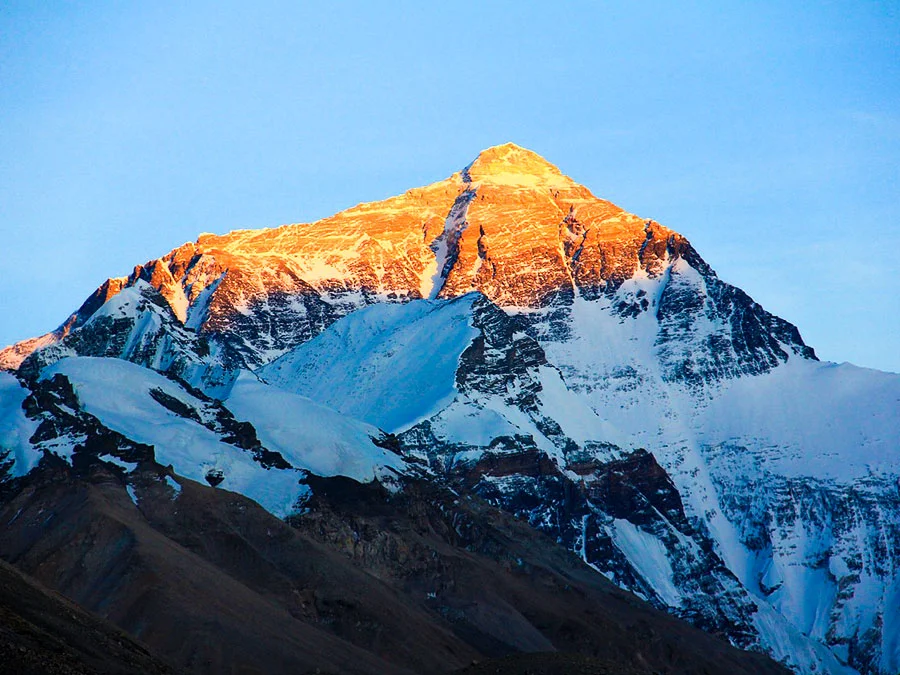
Everest Base Camp Trek
Starting from
₹72,000 ₹64,000

13 Days Trip

Outside India
Best season: March, April, May, June, September, October
Book A Tour
Total
₹ 0
Start Point : Kathmandu
End Point : Kathmandu
Short Itinerary
- Day 1: Arrival in Kathmandu (1,300 m / 4,300 ft)
- Day 2: Drive from Kathmandu to Ramechhap – Fly to Lukla – Trek to Phakding
- Day 3: Trek from Phakding to Namche Bazaar – Major Trading Hub of Khumbu
- Day 4: Acclimatization Day in Namche Bazaar
- Day 5: Trek from Namche Bazaar to Tengboche – Visit the Largest Monastery of Khumbu
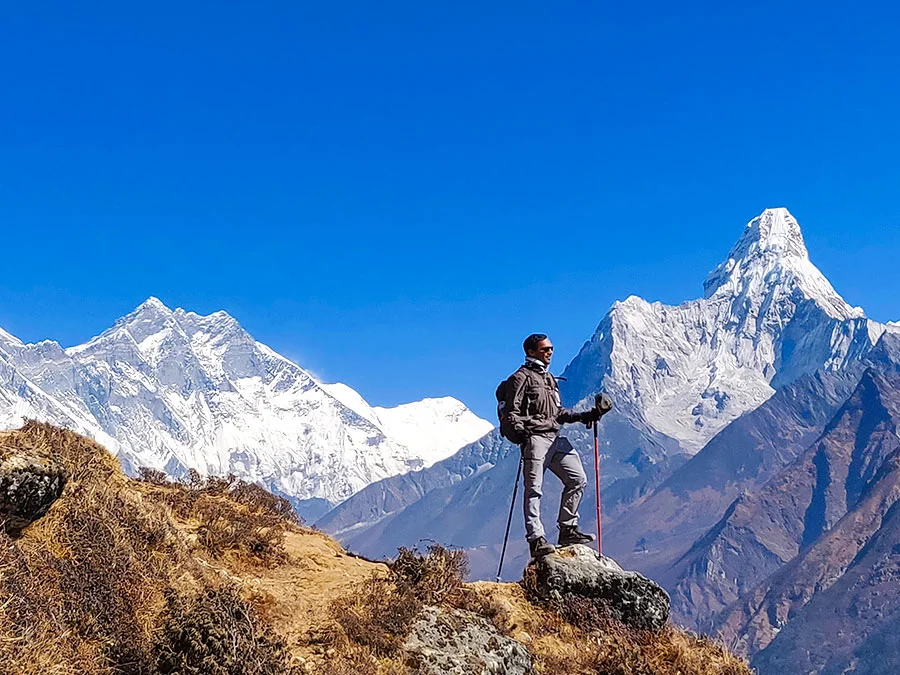
- Day 6: Trek from Tengboche to Dingboche – Stunning Views of Ama Dablam
- Day 7: Acclimatization Day in Dingboche
- Day 8: Trek from Dingboche to Lobuche – Visit Everest Memorial
- Day 9: Trek from Lobuche to Gorakshep – Excursion to Everest Base Camp
- Day 10: Hike to Kalapatthar – Trek to Pangboche
- Day 11: Trek from Pangboche to Namche Bazaar
- Day 12: Trek from Namche Bazaar to Phakding to Lukla – Last Day of Trekking
- Day 13: Flight from Lukla to Ramechhap – Drive to Kathmandu
The Everest Base Camp Trek is one of the most legendary trekking adventures in the world, offering an unforgettable journey to the base of the highest mountain on Earth, Mount Everest (8,848.86 m). This iconic trek takes you deep into the heart of the Khumbu region of Nepal, home to the famous Sherpa community and some of the most spectacular Himalayan landscapes. Starting from Kathmandu and flying into the thrilling mountain airstrip of Lukla, the trail winds through charming Sherpa villages, ancient monasteries, alpine forests, and glacial valleys before reaching the legendary Everest Base Camp at 5,400 meters.
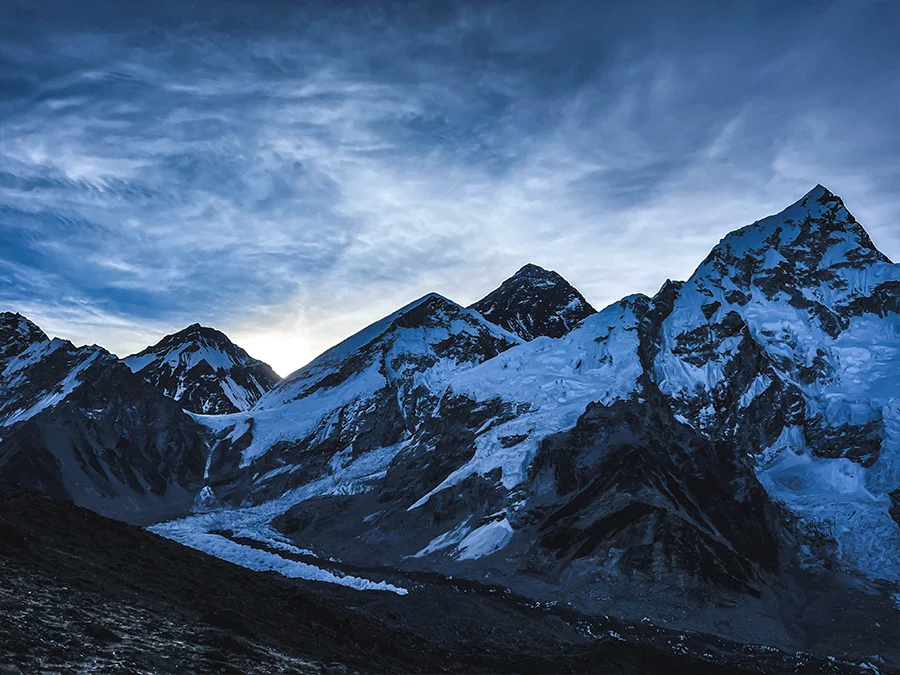
Along the route, trekkers pass through vibrant settlements like Namche Bazaar, Tengboche, Dingboche, and Lobuche, each offering unique insights into the culture and traditions of the Khumbu region. The trek also provides breathtaking views of some of the world’s most famous peaks including Everest, Lhotse, Nuptse, Ama Dablam, and Pumori. A major highlight of the journey is the sunrise hike to Kala Patthar (5,500 m), which offers the most spectacular panoramic view of Mount Everest and the surrounding Himalayan giants.
The Everest Base Camp Trek is considered a moderately challenging high-altitude trek, suitable for trekkers with good fitness and determination. With its dramatic landscapes, rich Sherpa culture, and the incredible achievement of reaching Everest Base Camp, this trek remains one of the most sought-after Himalayan adventures for trekkers from around the world.
Everest Base Camp Trek Itinerary (13 Days)
Day 1: Arrival in Kathmandu (1,300 m / 4,300 ft)
Your Everest Base Camp Trek begins with your arrival in Kathmandu, the vibrant capital city of Nepal and the gateway to the Himalayas. After reaching Kathmandu, transfer to the hotel and complete the check-in formalities. The rest of the day is free for relaxation or exploring the cultural highlights of the city such as Thamel Market, Durbar Square, or nearby monasteries. In the evening, the Parvat Exploration trek leader conducts a detailed briefing about the Everest Base Camp trekking route, safety guidelines, and gear check to prepare you for the upcoming Himalayan adventure.
Day 2: Drive from Kathmandu to Ramechhap – Fly to Lukla – Trek to Phakding
Altitude:
Lukla – 2,800 m / 9,200 ft
Phakding – 2,600 m / 8,500 ft
Trek Distance: 7 km | 4–5 hrs
Early in the morning, drive from Kathmandu to Ramechhap Airport for a scenic mountain flight to Lukla, one of the most thrilling airstrips in the world and the starting point of the Everest Base Camp Trek in Nepal. During the flight, enjoy spectacular aerial views of the Himalayas. After landing in Lukla, begin the trek through beautiful Sherpa villages and forests along the Dudh Koshi River valley. The trail gradually descends to Phakding, a peaceful riverside village where you will spend the night.
Note: Lukla flights are weather dependent and may get delayed. It is recommended to keep 3–4 buffer days in your travel plan.
Day 3: Trek from Phakding to Namche Bazaar – Major Trading Hub of Khumbu
Altitude:
Phakding – 2,600 m / 8,500 ft
Namche Bazaar – 3,500 m / 11,500 ft
Trek Distance: 10 km | 6–7 hrs
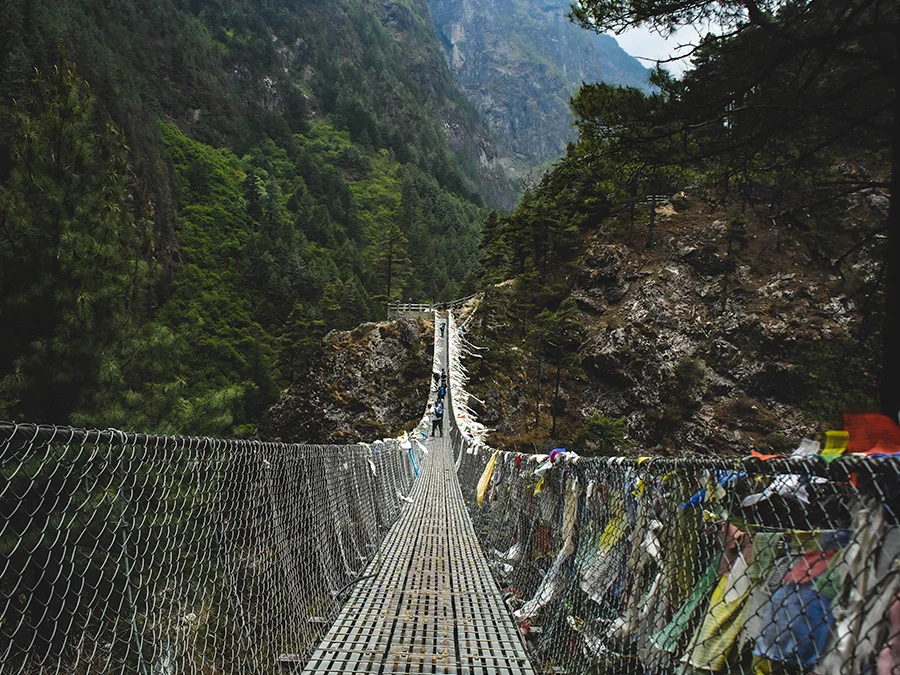
Today’s trek follows the scenic Dudh Koshi River and crosses several suspension bridges adorned with colorful prayer flags. The trail passes through beautiful pine forests and small Sherpa settlements before entering Sagarmatha National Park, a UNESCO World Heritage Site. After a challenging ascent, you will reach Namche Bazaar, the largest town in the Khumbu region and the main trading hub for trekkers and climbers heading toward Mount Everest.
Day 4: Acclimatization Day in Namche Bazaar
Acclimatization is essential for a safe Everest Base Camp trek. Today you will spend the day exploring Namche Bazaar and adjusting to the altitude. Short hikes to nearby viewpoints such as the Everest View Hotel or Khumjung village provide stunning views of Mount Everest, Lhotse, Ama Dablam, and Thamserku. You can also visit the Sherpa Culture Museum or enjoy local cafés and bakeries in the vibrant Namche market.
Day 5: Trek from Namche Bazaar to Tengboche – Visit the Largest Monastery of Khumbu
Altitude:
Namche Bazaar – 3,500 m / 11,500 ft
Tengboche – 3,900 m / 12,700 ft
Trek Distance: 11 km | 5–6 hrs
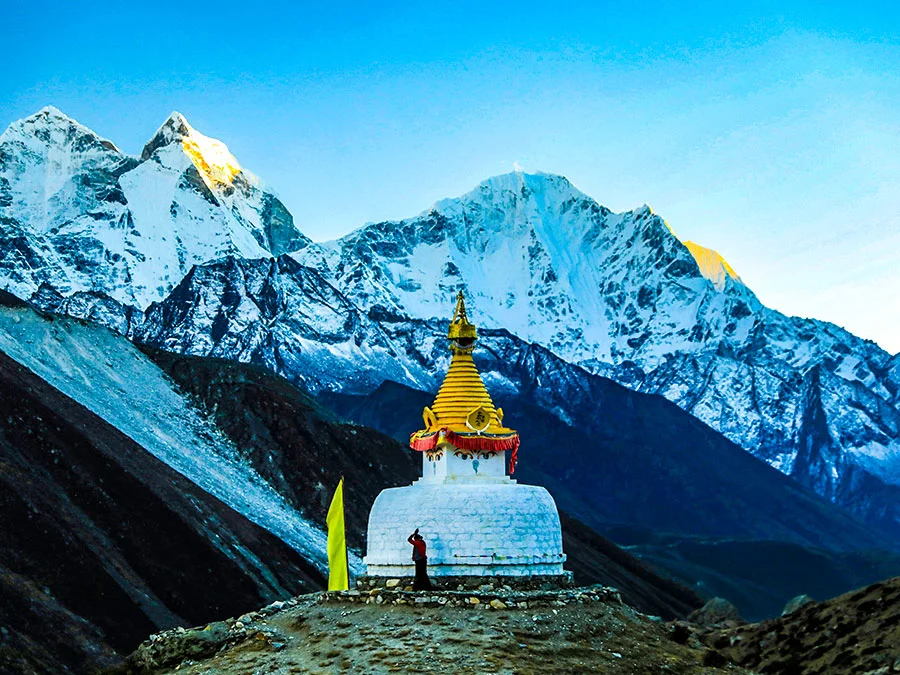
The trail today offers some of the most scenic views on the Everest trekking route. Walking along a high ridge, you will see magnificent peaks including Everest, Lhotse, Ama Dablam, and Nuptse. The trail gradually descends to the Dudh Koshi River before climbing through rhododendron forests to reach Tengboche, home to the famous Tengboche Monastery, the largest and most important Buddhist monastery in the Khumbu region.
Day 6: Trek from Tengboche to Dingboche – Stunning Views of Ama Dablam
Altitude:
Tengboche – 3,900 m / 12,700 ft
Dingboche – 4,300 m / 14,200 ft
Trek Distance: 12 km | 6–7 hrs
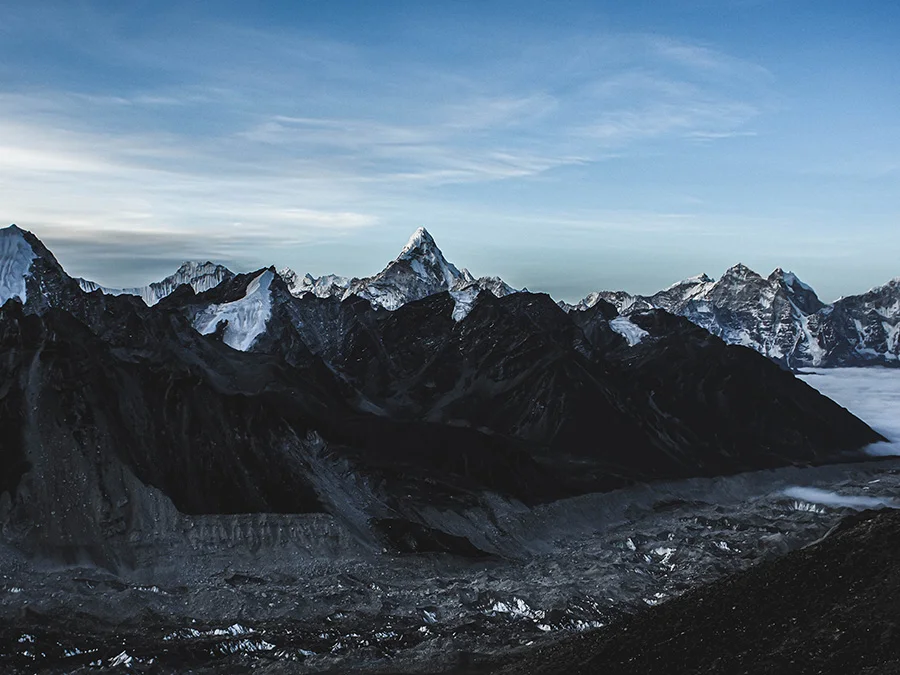
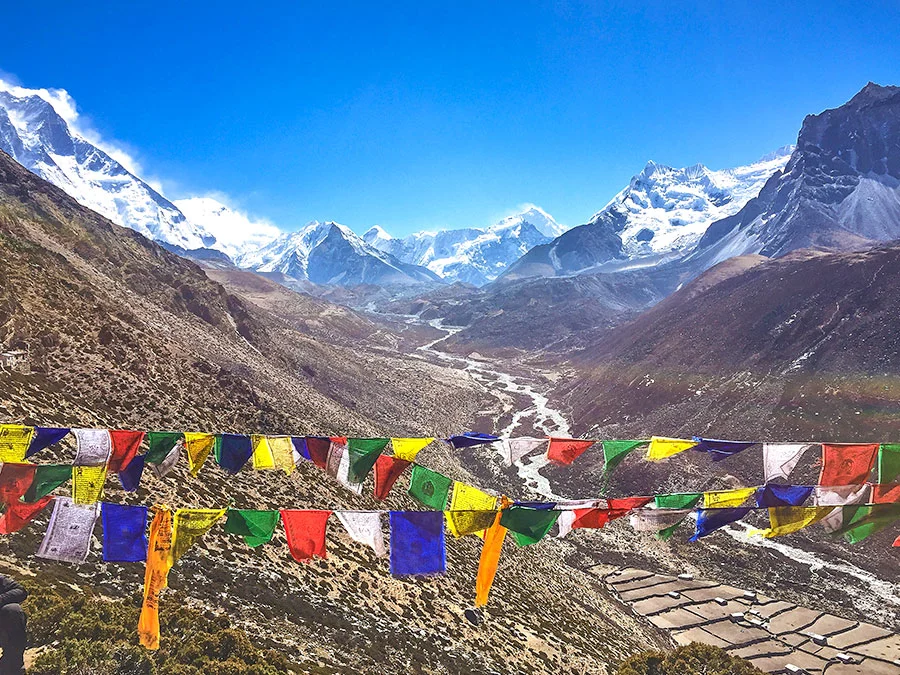
Descending through forests and crossing the Imja River, the trail leads toward the high-altitude village of Dingboche. Along the way, trekkers enjoy breathtaking views of Ama Dablam, one of the most beautiful mountains in the Himalayas. The landscape gradually becomes more alpine as you move deeper into the Khumbu valley.
Day 7: Acclimatization Day in Dingboche
Today is another important acclimatization day during the Everest Base Camp trek. Trekkers usually hike to nearby ridges or viewpoints such as Nangkartshang Peak, which offers incredible views of Makalu, Lhotse, and the surrounding Himalayan giants. The rest of the day is spent resting and preparing for the higher altitude sections of the trek.
Day 8: Trek from Dingboche to Lobuche – Visit Everest Memorial
Altitude:
Dingboche – 4,300 m / 14,200 ft
Lobuche – 4,900 m / 16,200 ft
Trek Distance: 6 km | 4–5 hrs
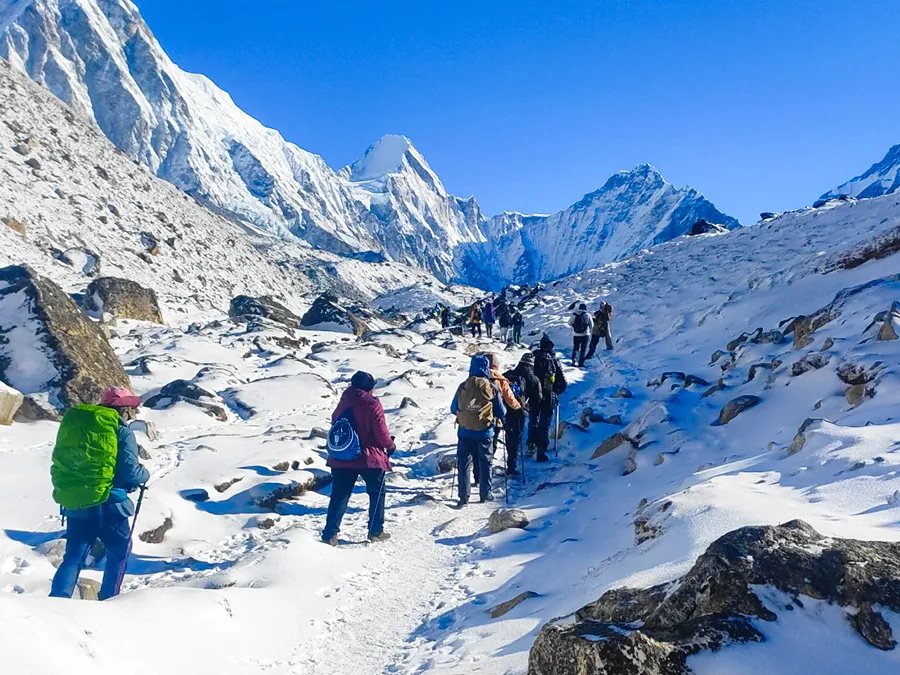
The trail gradually climbs along the glacial valley toward Thukla Pass, where trekkers visit the famous Everest Memorial, dedicated to climbers who lost their lives on Mount Everest. This emotional site is surrounded by dramatic mountain scenery. After paying respects, continue trekking to Lobuche, a small settlement located close to the Khumbu Glacier.
Day 9: Trek from Lobuche to Gorakshep – Excursion to Everest Base Camp
Altitude:
Gorakshep – 5,200 m / 17,000 ft
Everest Base Camp – 5,400 m / 17,700 ft
Trek Distance:
Lobuche to Gorakshep – 6 km | 3–4 hrs
Gorakshep to Everest Base Camp – 3 km each way | 2 hrs
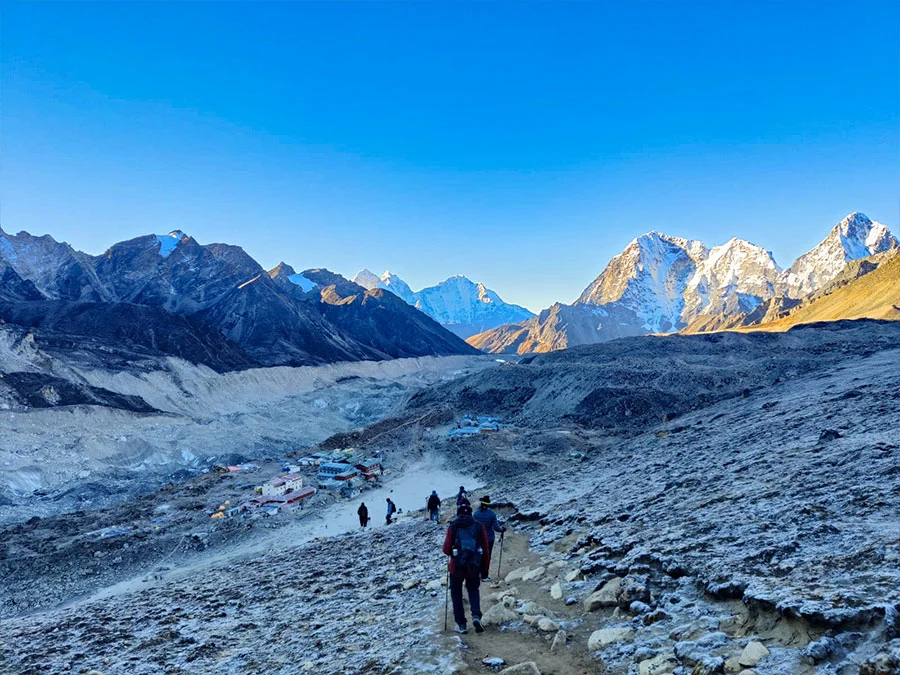
This is one of the most exciting days of the Everest Base Camp Trek. The trail follows the edge of the Khumbu Glacier before reaching Gorakshep, the last settlement before base camp. After a short rest, continue trekking across rocky glacial terrain to reach Everest Base Camp (5,400 m). Standing at the base of the world’s highest mountain is a dream moment for every trekker.
Day 10: Hike to Kalapatthar – Trek to Pangboche
Altitude:
Kalapatthar – 5,500 m / 18,200 ft
Pangboche – 3,900 m / 12,800 ft
Trek Distance:
Gorakshep to Kalapatthar – 4 km round trip | 3–4 hrs
Gorakshep to Pangboche – 19 km | 7–8 hrs
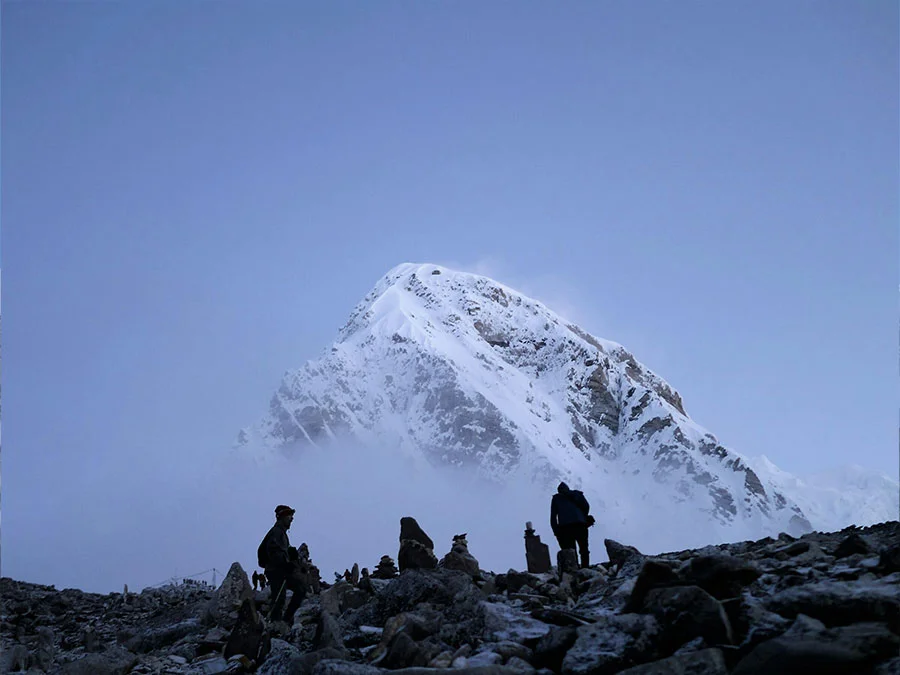
Early in the morning, hike to Kalapatthar, the best viewpoint of Mount Everest. From the summit, trekkers witness breathtaking sunrise views of Everest, Nuptse, and Pumori. After enjoying the spectacular panorama, descend back through Gorakshep and continue the return trek to Pangboche, a traditional Sherpa village.
Day 11: Trek from Pangboche to Namche Bazaar
Altitude:
Pangboche – 3,900 m / 12,800 ft
Namche Bazaar – 3,500 m / 11,500 ft
Trek Distance: 14 km | 6–7 hrs
Today’s trek retraces the scenic route through Tengboche and lush forests before descending toward Namche Bazaar. After several days in high altitude, returning to Namche feels lively and comfortable. Trekkers often explore the market and buy souvenirs from local shops.
Day 12: Trek from Namche Bazaar to Phakding to Lukla – Last Day of Trekking
Altitude:
Namche Bazaar – 3,500 m / 11,500 ft
Phakding – 2,600 m / 8,500 ft
Lukla – 2,800 m / 9,200 ft
Trek Distance: 16 km | 7–8 hrs
Today marks the final trekking day of the Everest Base Camp journey. Descend through forests, suspension bridges, and Sherpa villages while following the Dudh Koshi River back to Lukla. In the evening, celebrate the successful completion of the trek with the trekking team.
Day 13: Flight from Lukla to Ramechhap – Drive to Kathmandu
In the morning, take a scenic flight from Lukla to Ramechhap Airport and then drive back to Kathmandu. Upon arrival, transfer to your hotel. Your unforgettable Everest Base Camp Trek with Parvat Exploration concludes here with incredible memories of trekking in the Khumbu region and standing beneath the world’s highest peak.
-
Inclusions
1. Accommodation (As per itinerary)
-
Hotel accommodation in Kathmandu on Day 1 and Day 13 on twin sharing basis.
-
Teahouse accommodation from Day 2 to Day 12 during the Everest Base Camp trek.
2. Trek Support Team
-
1 Versatile Base Camp Manager to handle coordination and deploy extra manpower during emergencies.
-
1 Mountaineering & First Aid qualified professional Trek Leader.
-
Local experienced trekking guides (number depending on group size).
-
Adequate support staff for smooth expedition management.
3. Trekking Equipment
-
High quality Sleeping Bag suitable for sub-zero temperatures.
-
Gaiters and Microspikes (provided if required depending on weather conditions).
4. Safety & First Aid
-
Comprehensive medical kit carried by trek leader.
-
Portable stretcher for emergency evacuation support.
-
Oxygen cylinder for high-altitude safety.
-
Medical monitoring devices including Blood Pressure Monitor, Oximeter, and Stethoscope.
5. Transportation (As per itinerary)
-
Drive from Kathmandu to Ramechhap Airport and return.
6. Cloakroom Facility
-
Secure cloakroom facility in Kathmandu for storing extra luggage during the trek.
7. Permits & Documentation
-
All required Sagarmatha National Park permits and entry fees (covered up to the amount charged for Indian nationals).
-
TIMS (Trekkers’ Information Management System) Card.
8. Expedition Services
-
Complete trekking services from Kathmandu to Kathmandu.
9. Trek Resources
-
Everest Base Camp trekking map.
-
Official Trek Completion Certificate.
Exclusions
-
High Altitude Trekking Insurance (Mandatory)
Participants must arrange their own insurance covering high-altitude trekking and helicopter evacuation. -
Meals During Transit and during the trek.
Food during whole trek. -
Personal Expenses
Expenses such as snacks, beverages, laundry, shopping, and personal gear. -
Personal Porter or Mule Service
Porter or mule services for carrying personal luggage are not included and can be arranged at additional cost. -
Emergency Costs
Expenses related to helicopter evacuation, hospitalization, medical treatment, or rescue operations. -
Extra Services
Anything not specifically mentioned under the Inclusion section. -
Teahouse Services
Charges for Wi-Fi, charging electronic devices, hot showers, and warm drinking water during the trek. -
Tips & Gratuities
Customary tips for guides, porters, and support staff. -
Nepal Entry Visa
Nepal entry visa fees (approximately USD 40) for foreign nationals. Foreign nationals should bring two passport-size photographs. Indian citizens do not require a visa. -
Extra Accommodation
Additional hotel nights in Kathmandu due to early arrival, delayed departure, or flight cancellations. -
Domestic Airport Transfers for Lukla Flights
Transfers between hotel and domestic airport for Lukla flights in Kathmandu/Ramechhap. -
Unforeseen Circumstances
Additional costs arising due to flight cancellations, weather conditions, natural calamities, political situations, or other unforeseen circumstances beyond the organizer’s control.
-
Trek Highlights
-
Trek to the legendary Everest Base Camp (5,400 m / 17,700 ft) at the foot of the world’s highest mountain.
-
Witness breathtaking sunrise views of Mount Everest from Kala Patthar (5,500 m).
-
Scenic mountain flight to Lukla, one of the most thrilling airstrips in the world.
-
Explore Namche Bazaar, the vibrant trading hub and cultural center of the Khumbu region.
-
Visit the famous Tengboche Monastery, the largest Buddhist monastery in the Everest region.
-
Experience the unique Sherpa culture, traditions, and hospitality in Himalayan villages.
-
Walk through Sagarmatha National Park, a UNESCO World Heritage Site rich in Himalayan flora and fauna.
-
Witness close-up views of iconic peaks including Everest, Lhotse, Ama Dablam, Nuptse, and Thamserku.
-
Visit the Everest Memorial at Thukla Pass, honoring climbers who lost their lives on Everest.
-
Trek along the dramatic Khumbu Glacier and glacial moraine landscapes.
🏕️ Essential Trekking Gear Checklist
For Treks with Parvat Exploration
🎒 Backpacks
- Rucksack bag with rain cover – Qty: 1
- Daypack (Recommended for treks with summit day)
💡 Lighting
- Head torch with spare batteries – Qty: 1
🕶️ Eye & Hydration Protection
- UV protection sunglasses – Qty: 1
- Water bottles (1 liter each) – Qty: 2
👣 Footwear
- High-ankle trekking shoes (Non-skid, deep-treaded) – Qty: 1
- Lightweight slippers/sandals – Qty: 1
👕 Clothing
- Quick-dry trekking pants/lowers – Qty: 2
- Full-sleeve T-shirts/sweatshirts – 1 for every 2 days of trekking
- Woolen socks – 1 pair for every 2 days
- Thermal body warmer (upper & lower) – Qty: 1
- Undergarments – Qty: 1 per trekking day
- Warm, insulated jacket (wrist & neck closed) – Qty: 1
- Full-sleeve sweater – Qty: 1
- Rainwear (jacket & pants) – Qty: 1
- Waterproof, warm gloves – Qty: 1
- Woolen cap – Qty: 1
- Sun hat/cap – Qty: 1
🧼 Toiletries
- Personal kit (towel, toilet paper, paper soap, bar soap, toothbrush, toothpaste, cold cream, etc.)
- Sunscreen lotion (small pack) – Qty: 1
- Lip balm (small pack) – Qty: 1
🍽️ Utensils
- Lightweight, leak-proof lunch box – Qty: 1
- Plate – Qty: 1
- Spoon – Qty: 1
- Tea/Coffee mug (plastic) – Qty: 1
🧳 Miscellaneous
- Camera (optional)
- Personal medicines – Carry in sufficient quantity. Consult your doctor before the trek.
- Dry fruits, nuts, chocolate bars (optional)
🔔 Note:
This is a general checklist for multi-day Himalayan treks with Parvat Exploration. Please double-check with our team for any trek-specific recommendations or weather-related adjustments.
Measures Taken by Parvat Exploration to Ensure the Security of Trekkers
At Parvat Exploration, trekking isn’t just an adventure – it’s a transformative journey into the heart of the Himalayas. But with every adventure comes the responsibility of ensuring your well-being. Backed by a highly qualified team, local expertise, and global safety standards, we take every measure possible to prioritize your safety.
🧗♂️ Fitness Evaluation & Trek Readiness
High-altitude treks demand physical endurance and mental resilience. Before confirming your participation in any of our treks, we assess your fitness to minimize risk.
-
Body Mass Index (BMI) Check: Trekkers are evaluated to ensure a healthy BMI range suited for high-altitude exertion.
-
Fitness Declarations: Participants are required to submit fitness proof or undergo an assessment if needed.
-
Acclimatization Protocols: Every itinerary includes rest days specifically for acclimatization to reduce the risk of AMS.
🩺 Health Monitoring on Trail
Throughout the journey, your health is monitored regularly by our trained trek leaders:
-
Vital Checks: Daily monitoring of oxygen levels, pulse rate, and blood pressure.
-
Health Cards: Each trekker’s vitals are documented and can be reviewed at the end of the trek.
-
Immediate Response: Any early symptoms of AMS or other altitude-related issues are immediately addressed.
💊 Medical Safety Measures
Parvat Exploration is prepared with a comprehensive medical kit on all high-altitude treks. Our kits are equipped with:
-
Blood Pressure Monitor
-
Oxygen Saturation Meter (Pulse Oximeter)
-
Portable Oxygen Cylinders
-
High-altitude emergency medicines:
-
Diamox (for AMS)
-
Dexamethasone (for HAPE/HACE)
-
Nifedipine
-
Asthalin Inhaler
-
Disprin
-
Sterile Syringes
-
Our trek leaders are AMC-qualified (Advanced Mountaineering Course) and trained in Wilderness First Aid.
⛺ World-Class Trekking Equipment
We never compromise on gear. We provide:
-
Customized Tents: Weatherproof tents that retain heat up to 10°C higher than outside.
-
-15°C Sleeping Bags: Suitable for sub-zero Himalayan nights.
-
Microspikes & Gaiters: Essential gear for snow and slippery terrain.
-
Ropes, Ice Axes, and Stretchers as needed for technical terrain or rescue.
🍲 Nutrition & Hydration on Priority
We fuel your journey with the right meals at the right time:
-
Nutritious Meals: Our food is designed to meet high-altitude dietary needs.
-
Local Delicacies: Experience the taste of Uttarakhand and Himachal on every trek.
-
Hydration Monitoring: Trekkers are routinely reminded and encouraged to hydrate properly to reduce risk of AMS.
🚨 Emergency Response to AMS, HAPE & HACE
Our trek leaders are well-trained to detect and manage Acute Mountain Sickness (AMS), and more severe conditions like HAPE (High Altitude Pulmonary Edema) and HACE (High Altitude Cerebral Edema).
Recognizing AMS Symptoms:
-
Headache, nausea, dizziness
-
Difficulty sleeping or breathing
-
Loss of appetite or fatigue
Our Action Plan:
-
Triple One Protocol: 1 Disprin + 1 Liter Water + 1 Hour Rest.
-
Descent Protocol: If symptoms persist, the trekker is immediately escorted to a lower altitude.
-
Oxygen Support & Medication: Provided immediately if symptoms escalate.
We advise trekkers never to self-medicate. Always consult the trek leader first.
⚠️ Risk and Response Mechanism
🏔️ Altitude Risk
Response: Constant health checks, gradual ascent, acclimatization days, oxygen support.
🌦️ Weather Uncertainty
Response: Trek leaders take the final call. We never proceed in unsafe conditions.
🧍♂️ Injuries on Trail
Response: Minor injuries treated on-site. Serious injuries are evacuated via stretcher to the nearest roadhead and medical center.
📵 Lack of Communication
Response: Our team uses walkie-talkies and local support staff as runners for effective coordination across camps.
🛡️ Why You Can Trust Parvat Exploration
-
✅ 3 IMF Associate Members on our core team – among only 100 in India.
-
✅ Accredited by ATOAI, IMF, and Uttarakhand Tourism.
-
✅ Himalayan Locals as your guides – born and raised in the mountains.
-
✅ Focus on year-round safety, whether it’s a summer climb or winter expedition.
🔚 Final Word
Parvat Exploration believes a memorable trek is a safe trek. We combine years of mountaineering expertise, world-class equipment, local insight, and a commitment to excellence so you can explore the Himalayas with confidence.
🏔️ Pre-Trek Preparations | Parvat Exploration
At Parvat Exploration, we believe that trekking is more than just a journey through mountains — it’s a journey within. While the scenic beauty and untouched trails offer unforgettable memories, they also demand a fair share of physical endurance and mental resilience. It’s not just about being fit — it’s about being ready.
Whether you’re taking your first step on a trail or are a seasoned trekker preparing for a high-altitude adventure, here’s how to get trek-ready, the Parvat way.
🫀 Prerequisites of Trekking
1. Cardiovascular Endurance & Stamina
High-altitude treks test your lungs more than your legs. Building cardio endurance is non-negotiable. Jogging, swimming, cycling, or brisk walking — choose your style but stay consistent. Make it a goal-driven journey, just like your trek.
Progressive Stamina Plan:
-
🎯 Start with completing 5 km in 35 minutes or less
-
🏃♂️ Push further to 5 km in under 30 minutes
-
🏁 Before your trek, aim to finish 10 km in 60 minutes or less
Doing this 4-5 times a week, at least 2 months before your trek, can make a massive difference.
💪 Strength Training
Most Himalayan trails are a combination of ascents, descents, and flat stretches — think of it as climbing an eternal staircase. Building leg strength is crucial to manage these elevations while carrying a loaded backpack.
Recommended Routine:
-
Squats – Begin with 3 sets of 8 reps, aim to increase to 3 sets of 15 reps
-
Add lunges, step-ups, and planks to your routine for better balance and core strength
Strong legs = less fatigue = more views to soak in. 🏞️
🤸♂️ Flexibility
Trekking involves unpredictable terrains and movements — hopping over rocks, ducking under branches, and stretching across ledges. Without flexibility, even the smallest action can feel like a strain.
Daily Stretching Essentials:
-
Hamstrings
-
Quadriceps
-
Hip Flexors
-
Lower Back
-
Shoulders
Just 15–20 minutes of stretching each day can help relax muscles, improve posture, and prevent cramps or stiffness during the trek.
❤️🔥 Cardiovascular + Speed Endurance Mix
This is where most of your training time should go. A perfect mix of speed and endurance helps your heart adapt to thin air and long-distance trekking.
Sample Routine:
-
🏃 Start with 5 km in 45 mins
-
Gradually progress to 7 km in 45 mins
-
Aim for 10 km in 80–90 mins without breaks
The trick is consistency — every week counts.
🏋️ Back & Core Strength
A Himalayan backpack may only weigh 6–10 kg, but it feels heavier the higher you go. Building core strength and shoulder stability helps you carry that weight with ease.
Try these:
-
Planks (front & side)
-
Shoulder shrugs
-
Deadlifts (light-weighted)
-
Back extensions
Training your core will help you maintain posture and prevent lower back strain.
🧘 Mental Preparation
Even the strongest trekker may be tested by sudden weather changes or tough climbs. That’s where mental strength takes the lead.
At Parvat Exploration, we encourage practicing:
-
Breathing Exercises (Pranayama)
-
Meditation (10–15 mins daily)
-
Mindful Silence / Nature Walks
Mental calmness boosts your decision-making ability and allows you to be present — to feel every whisper of the wind, every crunch of gravel beneath your boots.
🔚 Final Word from Parvat Exploration
The Himalayas are humbling. They test and teach. Preparation is your way of respecting the mountain. Start early, stay regular, and trek mindfully.
Because out there, it’s just you, the trail, and the mountain calling.
Photos
Terms and Conditions – Parvat Exploration
Welcome to Parvat Exploration! We are thrilled to be a part of your journey into the Himalayas. To ensure a smooth, safe, and transparent experience, we request you to read our terms and conditions carefully before booking any trek, tour, or service with us.
1. Booking and Payment Terms
-
A minimum advance payment of 40% of the total package cost is required to confirm your booking.
-
The balance 60% must be paid 15 days prior to the start of the trek or tour.
-
For bookings made within 15 days of departure, 100% payment is required at the time of booking.
-
Payments can be made via bank transfer, UPI, credit/debit cards, or other authorized digital methods.
-
Payment receipts will be acknowledged via email or WhatsApp.
2. Cancellation Policy
-
30+ days before departure: 90% refund of the advance amount.
-
15–29 days before departure: 60% refund of the advance amount.
-
7–14 days before departure: 30% refund of the advance amount.
-
Less than 7 days or no-show: No refund.
-
Refunds will be processed within 10–15 business days to the original payment method.
3. Itinerary Policy
-
The itinerary is tentative and subject to change based on weather, road conditions, local restrictions, or unforeseen events.
-
Final details will be shared closer to the departure or on-ground by the trek leader.
-
The trek leader reserves the right to make adjustments in the interest of safety or logistics.
4. Hotel & Transport Disclaimer
-
Hotel check-in/out timings follow the respective hotel’s policies; early check-in or late check-out may incur extra charges.
-
Transport may be shared or private depending on the package.
-
In the case of vehicle breakdowns, delays due to weather/roadblocks, or similar issues, we will make reasonable alternative arrangements—but no refunds or compensation will be provided.
5. Risk & Liability Disclaimer
-
Himalayan treks involve inherent risks including altitude sickness, landslides, injuries, wildlife, and weather unpredictability.
-
By booking, participants voluntarily accept these risks. Parvat Exploration, its team, or affiliates shall not be liable for any loss, injury, or delays.
-
Participants must follow trek leader instructions and avoid risky behavior.
-
Any costs for emergency evacuation, medical help, or rescue must be borne by the participant.
6. Medical & Fitness Requirements
-
Participants must disclose any pre-existing medical conditions at the time of booking.
-
High-altitude trekking demands good physical fitness; participants are advised to follow a preparatory fitness regime.
-
Parvat Exploration reserves the right to deny participation to individuals found medically unfit or under the influence of alcohol or drugs.
7. Code of Conduct
-
Trekkers are expected to maintain respectful behavior toward fellow participants, locals, and staff.
-
Littering, damaging nature or property, or violating forest laws may result in termination without refund.
-
Smoking and drinking are strictly prohibited during trek hours and at campsites.
8. Travel Insurance
-
Travel insurance is strongly recommended and should cover evacuation, injury, illness, and trip cancellations.
-
Not included in the package unless specifically mentioned.
-
Participants may purchase personal insurance from authorized providers.
9. Force Majeure
-
Parvat Exploration is not liable for service delays or failures due to natural disasters, pandemics, war, strikes, government restrictions, or other uncontrollable events.
10. Jurisdiction
-
Any dispute shall be under the jurisdiction of courts in Dehradun, Uttarakhand, or as otherwise specified by Parvat Exploration.
11. Contact Us
📞 +91 83830 88283 | +91 94561 12947
📧 explore@parvatexploration.com
🌐 www.parvatexploration.com
12. Special Casual Leave for Government Employees
Parvat Exploration, a registered adventure tour operator, qualifies government employees to avail Special Casual Leave (SCL) for up to 30 days in a calendar year, as per Pay Commission guidelines. This is applicable when participating in trekking or mountaineering expeditions organized by registered operators like us.
13. Special Note for Junior Trekkers
-
Participants below 15 years must be accompanied by a parent or guardian.
-
Trekkers aged 15 to 18 years may participate solo with a signed disclaimer from a parent or guardian.
Starting from
₹72,000 ₹64,000
13 Days Trip
Outside India


Reviews
There are no reviews yet.